Safety-first method
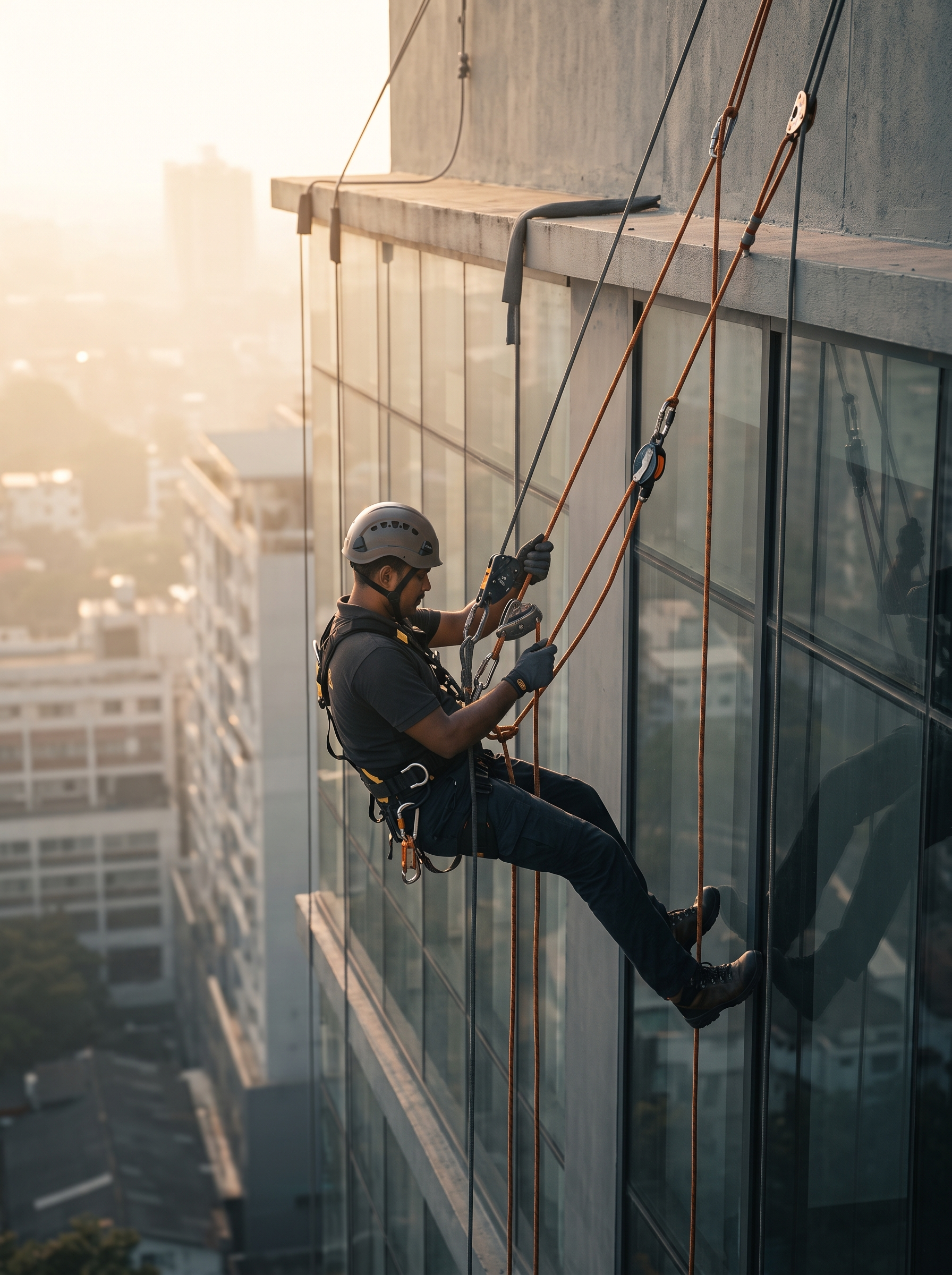
Two independent rope systems, locking connectors, pre-shift equipment checks and a rescue plan written for the specific structure.
Colombo · Sri Lanka
Professional rope access and high-access solutions for buildings, industrial facilities and difficult-to-reach positions across Sri Lanka. Two ropes, a trained technician and no scaffold on your footpath.
Services
Cleaning, inspection, coating and repair on building facades and industrial structures — delivered from ropes instead of scaffold, so the work starts sooner and the building keeps operating.
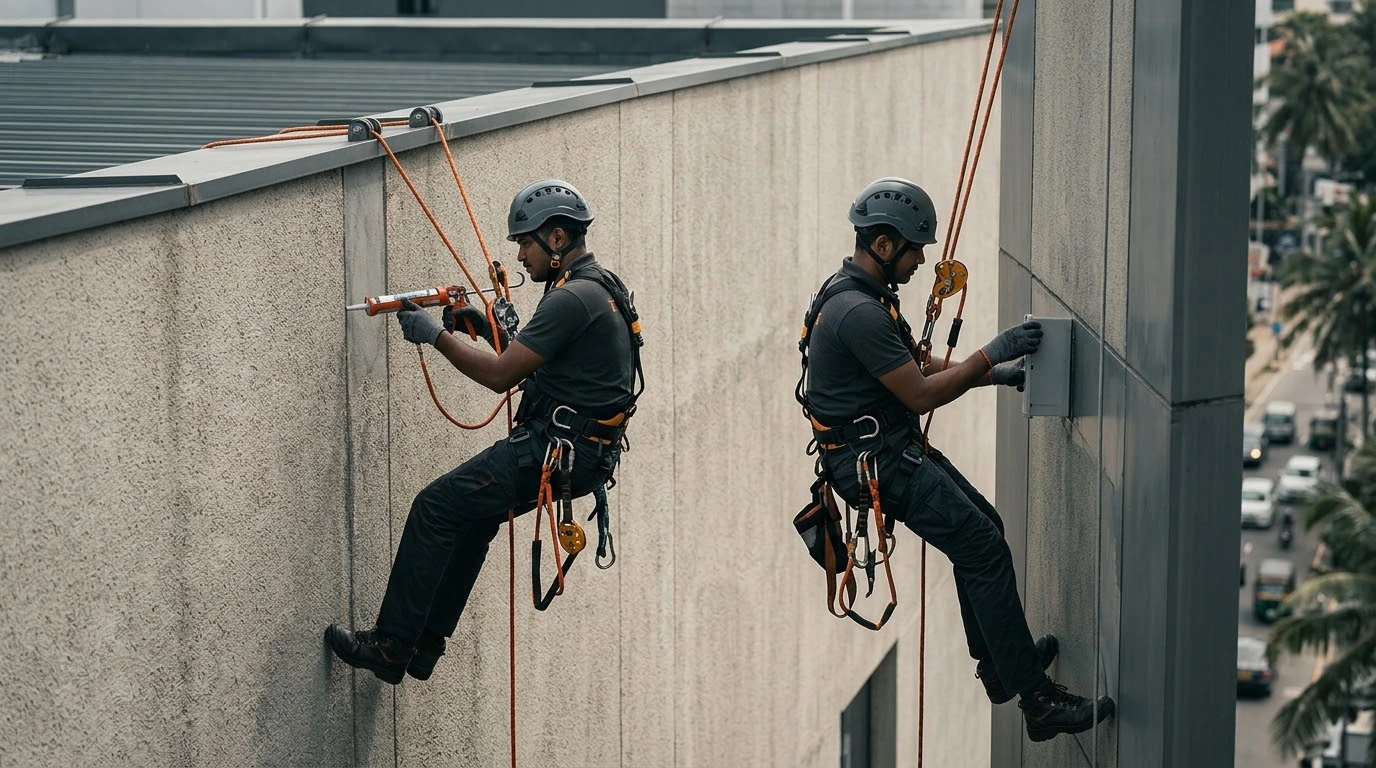
Two-rope industrial access for facades, structures and any position a ladder or platform cannot reach.
Service detail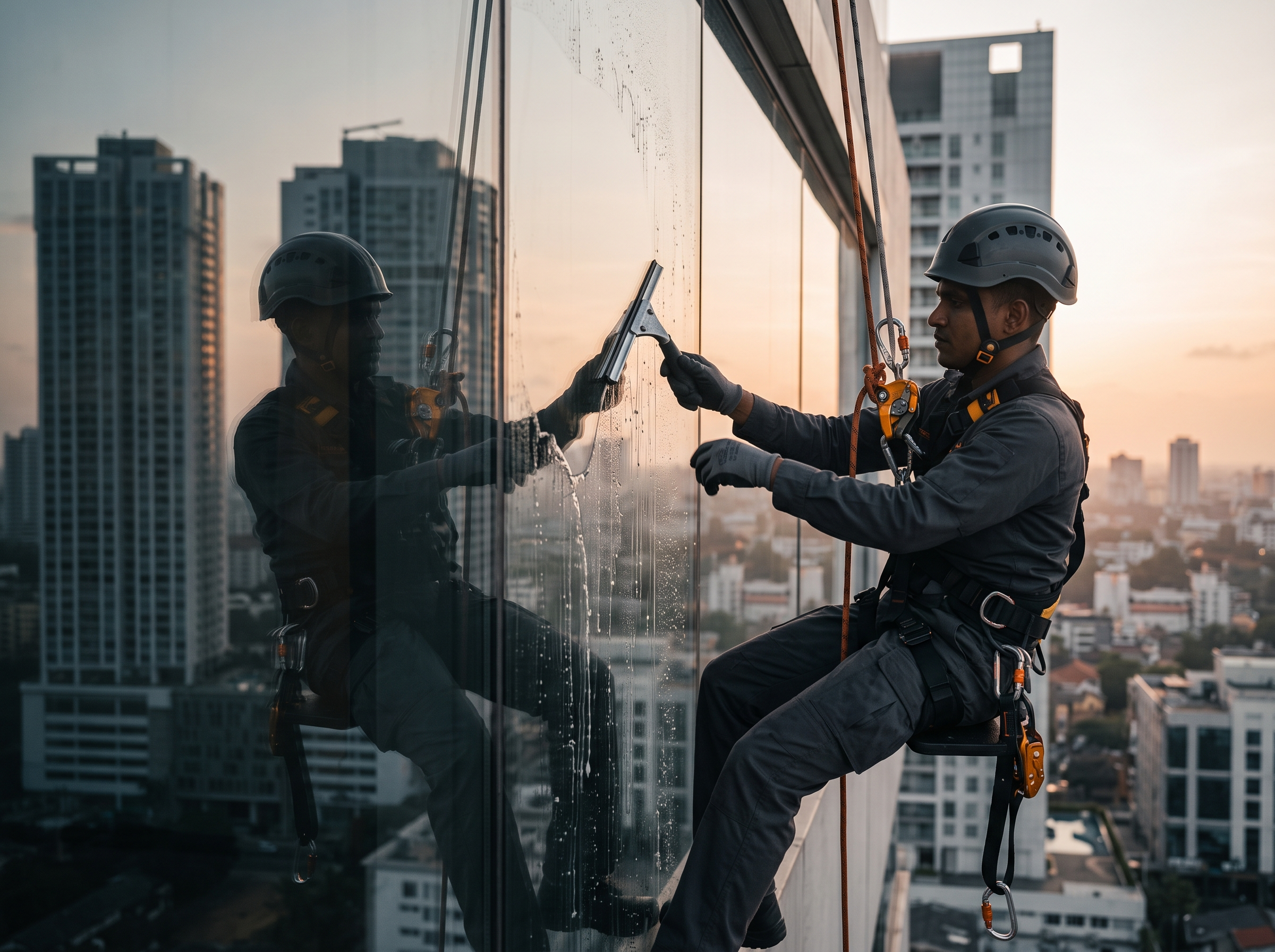
Streak-free glass, frames and gaskets on tall elevations, with drop-by-drop scheduling around tenants.
Service detail
Method matched to the substrate — soft washing, low-pressure rinsing or chemical treatment for growth and staining.
Service detail
Preparation, priming and finish coats applied in controlled drops, with masking and overspray control.
Service detail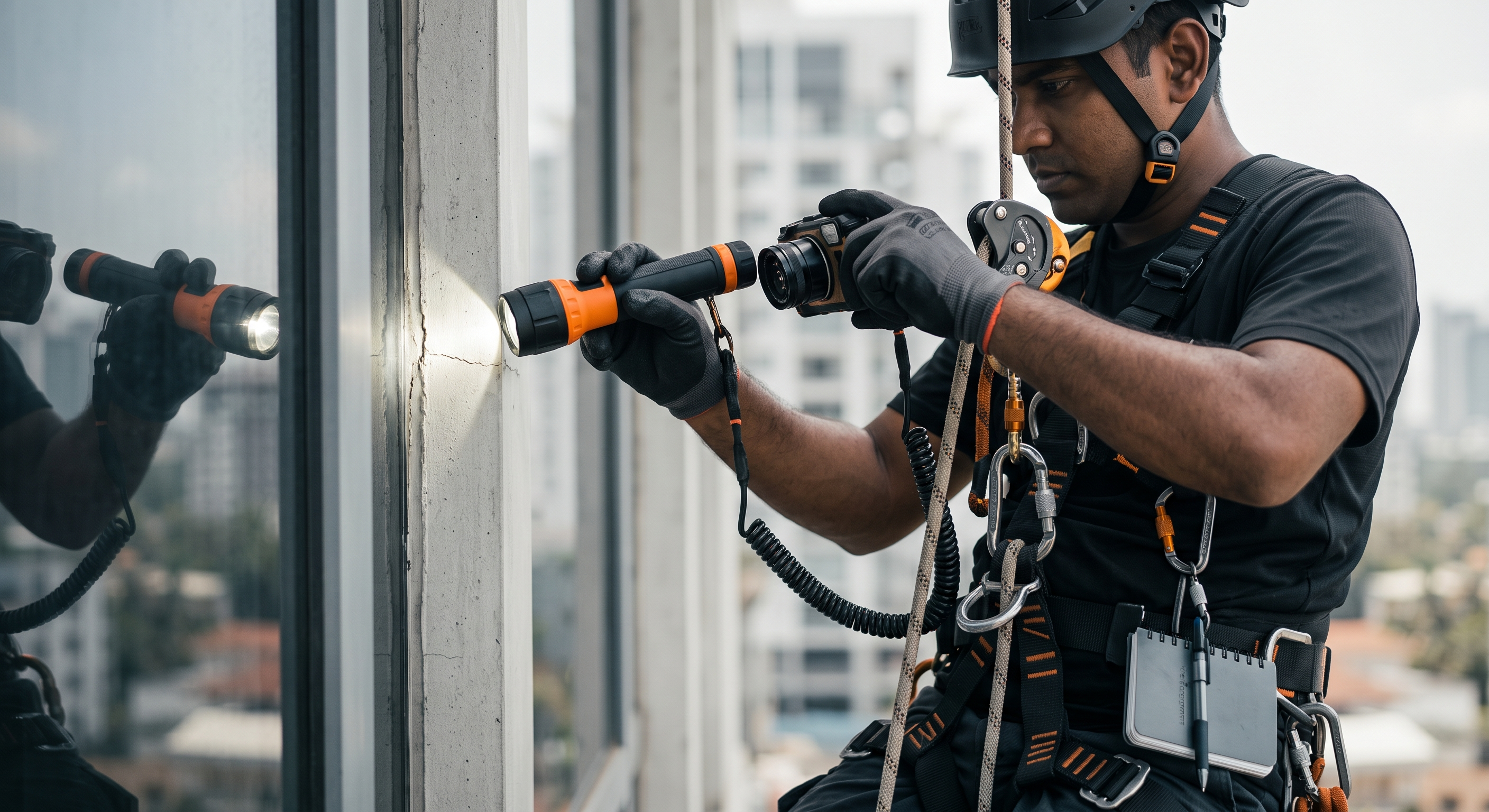
Defects found at arm's length instead of guessed at through binoculars from the pavement.
Service detail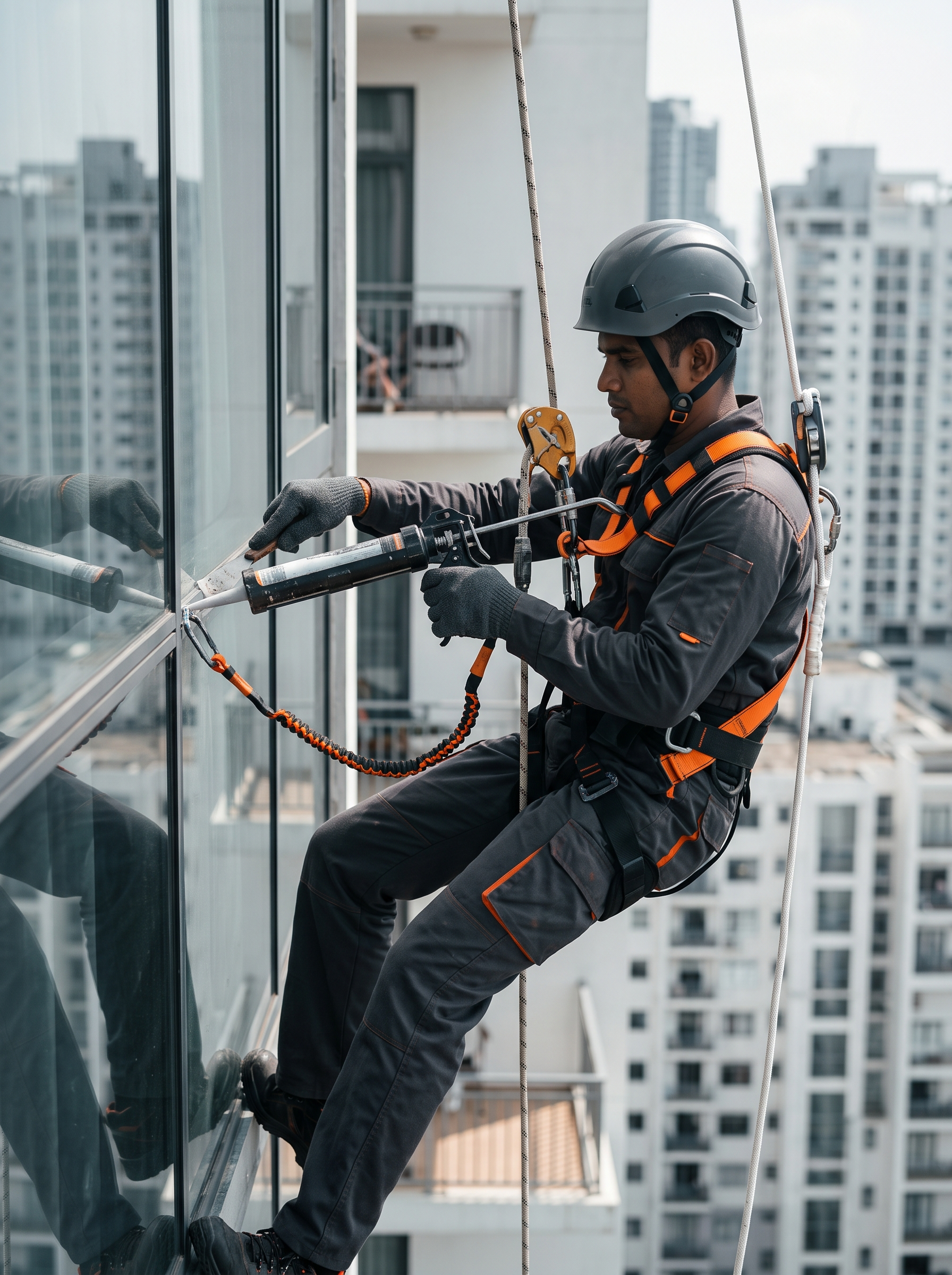
One team for facade fabric, sealant, drainage, fixings and finishes on a planned cycle rather than an emergency call.
Service detailWhy rope access
Scaffold is a building project in itself. On facade work, access is usually the most expensive and most disruptive part of the job — and the part that delays everything else.
Two independent rope systems, locking connectors, pre-shift equipment checks and a rescue plan written for the specific structure.
Nothing built on the footpath, no car-park bays lost for months, no crane permits, and no long dismantle at the end of the job.
Access rigged in hours, so short and scattered jobs get done instead of waiting for a scaffold design to be worth it.
A temporary exclusion zone under the active drop only. Tenants, guests and shoppers keep using the building.
Set-backs, fins, soffits, atriums, light wells, shafts and gaps between buildings that platforms cannot physically enter.
Findings located by elevation and level, photographed, and rated so repairs can be prioritised and budgeted.
Anchors, edges, wind exposure, drop lines and ground control assessed on your building before a method is proposed.
Cleaning, sealing, inspection and small repairs completed on the same rig instead of mobilising three times.
Both are legitimate methods, and the honest answer depends on your job. Scaffolding wins when several trades need a working platform for weeks. Rope access wins when the work is spread over a tall elevation, when the programme is short, or when the ground below cannot be occupied.
| Consideration | Rope access | Scaffolding |
|---|---|---|
| Set-up time | Hours, from roof anchors | Days to weeks, built from ground level |
| Ground impact | Temporary exclusion zone under the active drop | Footpath, parking and entrance space occupied throughout |
| Reaching odd shapes | Set-backs, fins, soffits, atriums and voids | Needs redesign, often infeasible |
| Best suited to | Cleaning, inspection, sealing, coating, localised repair | Heavy, continuous work needing a platform |
| Security exposure | Nothing left in place overnight | Standing structure needs alarming and anti-climb measures |
Safety
That assumption is the whole point. Every descent runs on two independent rope systems, so no single rope, anchor, connector or device is ever the only thing holding a technician.
Industries
From apartment towers and hotels to factories, telecom towers and port structures — anywhere access is the reason work keeps getting postponed.
Office towers where the facade has to look maintained and the work cannot interrupt tenants. Cleaning, sealant, inspection and repainting programmed drop by drop, outside peak hours where needed.
Apartment and condominium buildings, where scaffold means losing car parks, entrances and balcony use for months. Rope access keeps the building livable while the elevation gets fixed.
Guest-facing exteriors that cannot be wrapped in scaffold during season. Work staged elevation by elevation, with areas handed back clean each day.
Sites where access routes, noise and infection control matter more than speed. Small teams, contained work areas and no ground-level obstruction to ambulance or service access.
Snagging, final glass cleaning, sealant completion and defect rectification after scaffold and hoists have come down — the point at which access usually becomes the problem.
Process plant, structural steel, tanks and silos. Access carried in by hand and rigged around production so the plant does not stop for scaffold.
Applications
Representative scopes rather than named projects. When we have completed work you would like published, the Projects page is built to take real photographs and details.
A complete external wash of glazing, frames and cladding, worked top to bottom in drops, with glazing and sealant defects reported as they are found.
Hands-on inspection of the full envelope, photographed and located by elevation and level, with a severity-rated defect schedule for budgeting.
Wash down, growth treatment, crack repair, spot priming and a specified coating system, applied drop by drop and released floor by floor.
Failed perimeter and movement joints cut out, prepared and resealed with a compatible system, prioritising the elevations taking the weather.
Spalled areas broken out, reinforcement treated, reinstated with repair mortar and protected — without scaffolding twenty floors for scattered defects.
Inspection, cleaning, coating and minor repair on tanks, steelwork and towers, rigged around a live plant or into a shutdown window.
Equipment
Rope access is only as good as the hardware and the discipline around it. Everything load-bearing is rated, logged and checked, and anything questionable is withdrawn rather than watched.
Carries the technician's weight through the thighs, waist and shoulders and provides the sternal, dorsal and lateral attachment points used for descent, work positioning and rescue.
Work-at-height helmet with a retained chin strap, so it stays on during a slip or an inversion, and protects against both impact and dropped objects.
Controls the rate of descent on the working line. Self-braking types lock when the handle is released or gripped in panic, which is why they are standard for industrial work.
Runs on the second, independent rope and arrests the technician if the working line or the descender fails. Nothing about a descent depends on a single component.
Hand and chest ascenders let a technician climb back up a rope, re-position mid-elevation, or pass a deviation without returning to the ground.
Locking connectors with a stated strength rating and a screw or auto-locking gate. Every load-bearing link in the system is a locked connector, never a snap gate.
Process
A real sequence, which is why it is numbered. Nothing is rigged before the site visit and the method are agreed.
Tell us the building, the elevation and the problem. A photograph from the ground and the number of floors is usually enough to start a conversation.
We look at the roof, the anchors, the edges, the ground below and the way the building is used, because those four things decide the method.
A written scope, access method, programme and price. Assumptions and exclusions are stated so the quote can be compared with anyone else's.
Site-specific risk assessment and method statement, plus a rescue plan for the actual structure, agreed with you before mobilisation.
Access set up, exclusion zones and signage in place below, equipment checked and logged, and the day's drops briefed with the team.
Work carried out drop by drop, with progress and any new findings reported as they are discovered rather than at the end.
Areas cleaned and released, photographic record of the work, and a note of anything found that falls outside the current scope.
2
Independent ropes
Working line plus backup, on every descent.
22
Services at height
Cleaning, inspection, coating, repair and installation.
15
Sectors served
Commercial, residential, industrial, marine and infrastructure.
0m²
Scaffold footprint
Nothing built on your footpath or parking.
Client feedback
Editable placeholder — replace with real client feedback
This card is a placeholder for genuine client feedback. Replace this paragraph with a quote you have permission to publish, in
index.php. Until then it stays clearly marked, because we would rather show an empty frame than invent a review.Client name · Role · Building type
This card is a placeholder for genuine client feedback. Replace this paragraph with a quote you have permission to publish, in
index.php. Until then it stays clearly marked, because we would rather show an empty frame than invent a review.Client name · Role · Building type
This card is a placeholder for genuine client feedback. Replace this paragraph with a quote you have permission to publish, in
index.php. Until then it stays clearly marked, because we would rather show an empty frame than invent a review.Client name · Role · Building type
Questions
The questions building owners and property managers ask before the first site visit.
Rope access is a method of reaching a work position using ropes rather than scaffolding, cradles or platforms. The technician hangs from a working rope and is protected by a second, independent backup rope, and both are anchored to the structure. It is used wherever access is high, awkward or too temporary to justify building something.
The method is built around the assumption that one component can fail. There are always two independent rope systems, connectors are locking, anchors are assessed before use, equipment is inspected before every shift, and a rescue plan for the specific structure is in place before anyone leaves the anchor. Safety comes from that discipline being applied every single time, not from the equipment alone.
Anchors on the roof or structure are assessed and rigged, edges are protected, and exclusion zones are set up below. The technician descends the elevation in a controlled drop, working across a strip as they go, then re-rigs for the next drop. Most facade work moves top to bottom and left to right until the elevation is complete.
Scaffolding is better when many trades need to stand on a working platform for a long time, or when the work needs continuous support. Rope access is better when the work is spread over a tall elevation, when the programme is short, when the ground below cannot be occupied, or when the shape of the building makes scaffold expensive to design. For inspection, cleaning, sealing, coating and localised repair, rope access is usually faster and less disruptive.
Almost any structure with sound anchor points or structure to rig from: apartment and office towers, hotels, hospitals, malls, warehouses, factories, telecom towers, bridges, jetties and industrial plant. The height is rarely the limitation — the anchor arrangement and the shape of the elevation are what determine the method.
No. Entrances, car parks and walkways stay in use, with a temporary exclusion zone under the active drop only. Work can be staged elevation by elevation, and on retail and hospitality sites it can be scheduled outside trading or occupancy hours.
After a site visit, based on the elevation area or the defect quantity, the access arrangement, the number of drops and the programme. The quote states its assumptions and exclusions so you can compare it properly against other methods.
Colombo, Greater Colombo and the Western Province are the core service area, and work elsewhere in Sri Lanka is considered case by case depending on the scope and duration. Call +94 77 6 450 450 to check a location.
Contact
Send the building, the elevation and the problem. We will tell you whether rope access is the right method before we quote it.