Repair & waterproofing
Waterproofing & Leak Sealing
Finding water ingress at height and sealing it at source.
Detail
How this work is done
Water rarely enters where it appears. A wet patch on the ninth floor can start at a coping three floors above, track down a cavity and emerge sideways. Rope access lets a technician follow the elevation upward from the symptom, testing joints, copings, penetrations, window perimeters and cracks until the entry point is found rather than guessed.
Once the source is identified the repair is specified to suit it: cut out and reseal a failed joint, redetail a coping or parapet, patch a vertical membrane, inject a crack, or reseal a window perimeter with a compatible sealant system.
How we manage safety applies to every job on this page, and the equipment is inspected before each shift.
- Entry point traced up the elevation instead of sealed by guesswork.
- Repairs specified to the actual failure, joint by joint.
- Sealant systems selected for substrate compatibility and joint movement.
- No scaffold needed to chase a leak up eight floors.
- Facade and movement joints
- Copings, parapets and upstands
- Window and door perimeters
- Service penetrations at height
- Vertical and podium membrane repair
Process
What happens after you call
The same sequence on every job, whatever the scope.
Enquiry
Tell us the building, the elevation and the problem. A photograph from the ground and the number of floors is usually enough to start a conversation.
Site visit
We look at the roof, the anchors, the edges, the ground below and the way the building is used, because those four things decide the method.
Method & quote
A written scope, access method, programme and price. Assumptions and exclusions are stated so the quote can be compared with anyone else's.
Risk assessment
Site-specific risk assessment and method statement, plus a rescue plan for the actual structure, agreed with you before mobilisation.
Mobilisation
Access set up, exclusion zones and signage in place below, equipment checked and logged, and the day's drops briefed with the team.
Questions
Common questions
What is rope access?
Rope access is a method of reaching a work position using ropes rather than scaffolding, cradles or platforms. The technician hangs from a working rope and is protected by a second, independent backup rope, and both are anchored to the structure. It is used wherever access is high, awkward or too temporary to justify building something.
Is rope access safe?
The method is built around the assumption that one component can fail. There are always two independent rope systems, connectors are locking, anchors are assessed before use, equipment is inspected before every shift, and a rescue plan for the specific structure is in place before anyone leaves the anchor. Safety comes from that discipline being applied every single time, not from the equipment alone.
How does rope access work in practice?
Anchors on the roof or structure are assessed and rigged, edges are protected, and exclusion zones are set up below. The technician descends the elevation in a controlled drop, working across a strip as they go, then re-rigs for the next drop. Most facade work moves top to bottom and left to right until the elevation is complete.
Rope access or scaffolding — which should I use?
Scaffolding is better when many trades need to stand on a working platform for a long time, or when the work needs continuous support. Rope access is better when the work is spread over a tall elevation, when the programme is short, when the ground below cannot be occupied, or when the shape of the building makes scaffold expensive to design. For inspection, cleaning, sealing, coating and localised repair, rope access is usually faster and less disruptive.
Related
Often needed on the same visit
One access set-up can usually cover more than one of these, which saves a second mobilisation.
Concrete & Crack Repair
Break out, treat reinforcement, reinstate with repair mortar and protect — without a full scaffold.
Service detail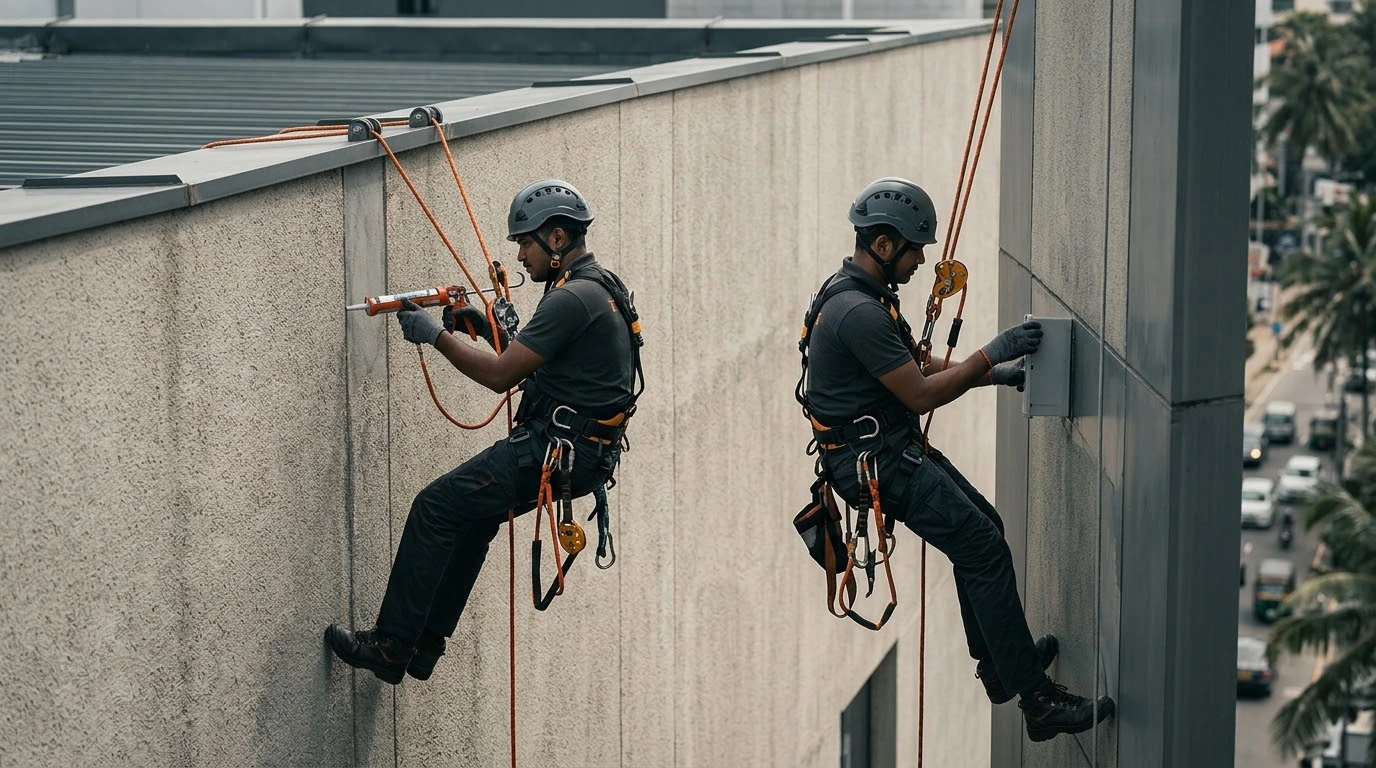
Rope Access Services
Two-rope industrial access for facades, structures and any position a ladder or platform cannot reach.
Service detail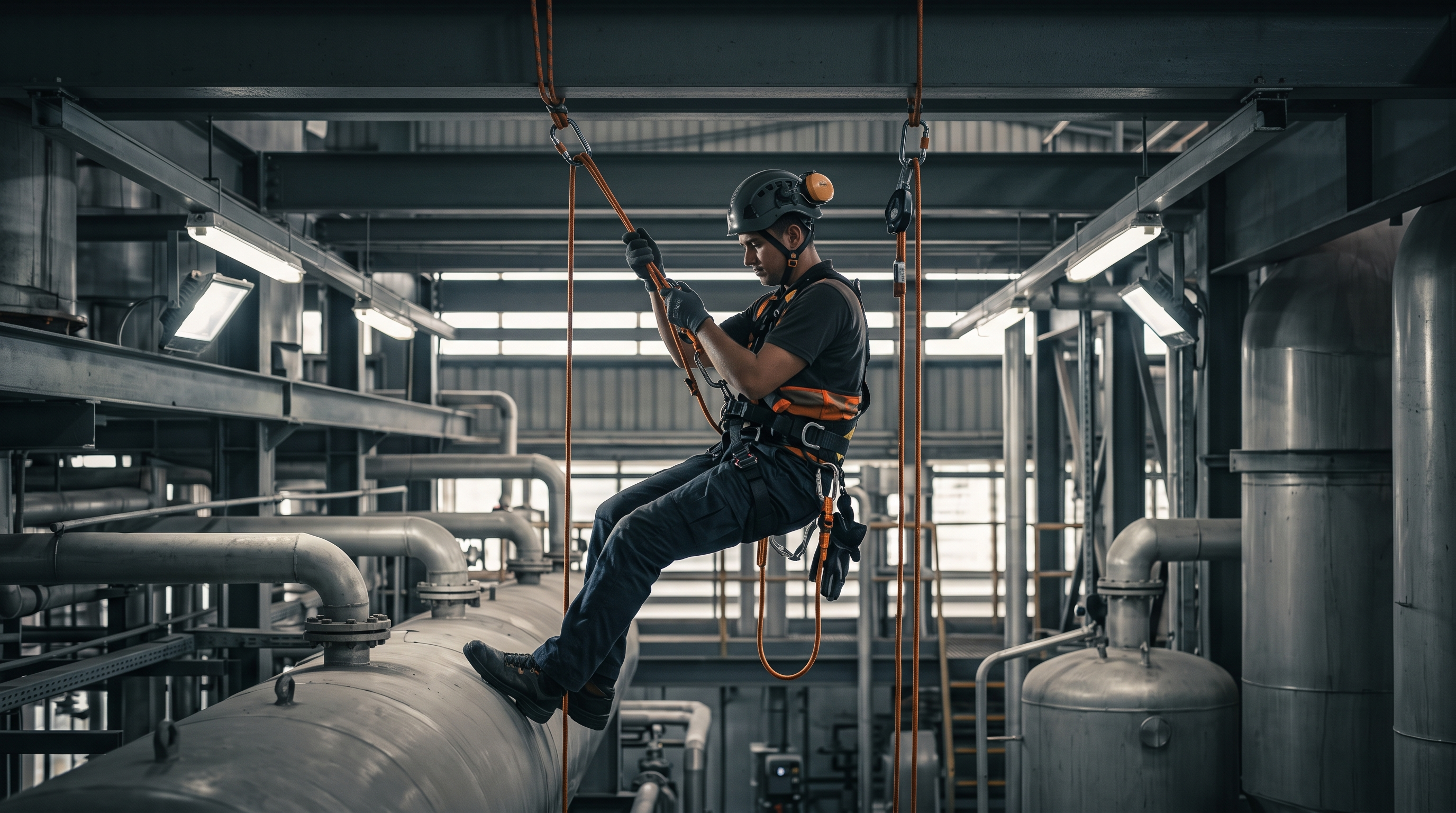
Industrial Rope Access
Access for tanks, silos, stacks, conveyors, towers and structural steel without erecting scaffold inside a live plant.
Service detailContact
Need waterproofing & leak sealing? Let’s talk.
Send the building, the elevation and the problem. We will tell you whether rope access is the right method before we quote it.