Access methods
Rope Access Services
Industrial rope access for buildings and structures across Colombo and Sri Lanka.
Detail
How this work is done
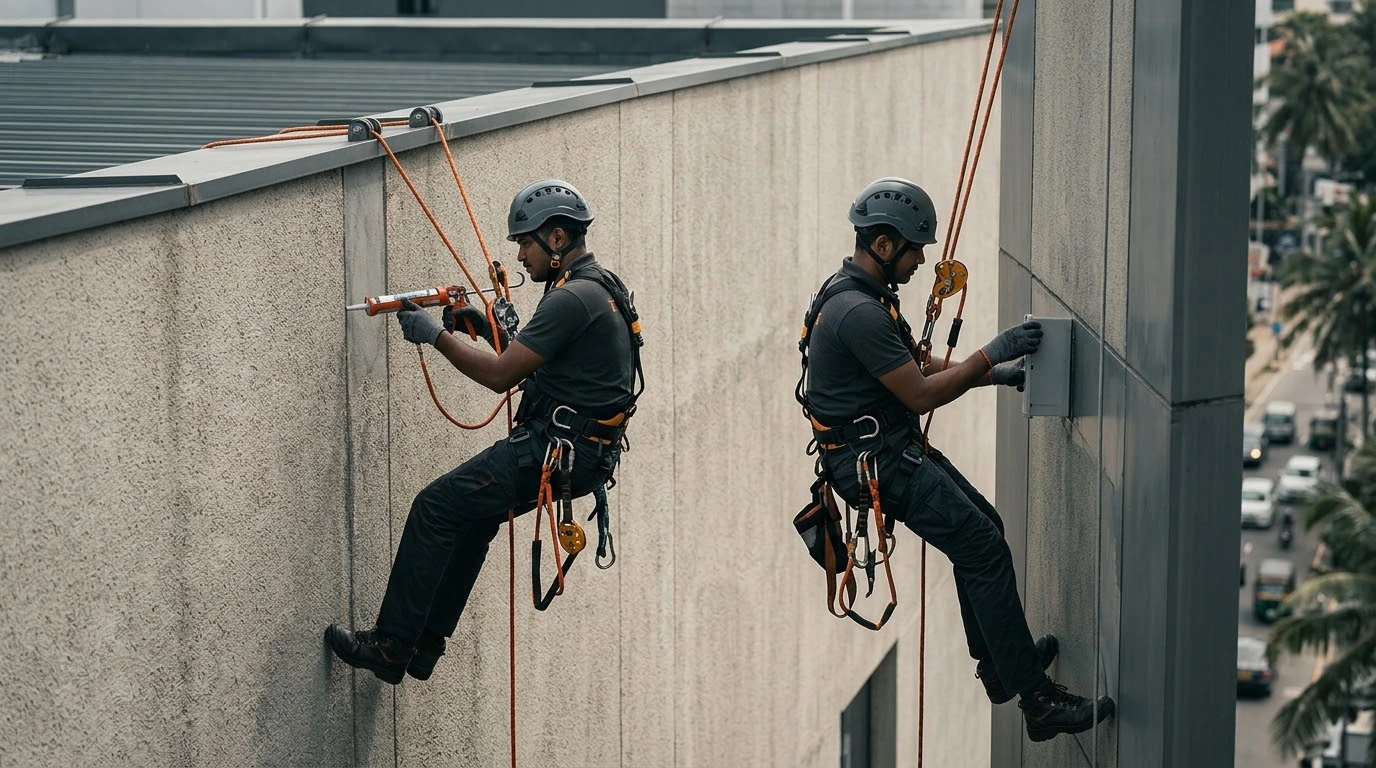
Rope access is a method of positioning a technician exactly where the work is, using two independent ropes: a working line that carries the technician and an independent backup line that arrests a fall if anything goes wrong on the first. Anchors are selected and checked before descent, edges are protected, and the technician stays connected to both systems from the moment they leave the anchor to the moment they land.
Because access is set up from the roof or from an existing structural anchor rather than built from the ground up, most facade work can begin the same day the site is cleared. There is no scaffold footprint on the pavement, no crane permit, no loss of car-park bays for weeks, and no long dismantle at the end. On a tall or awkward elevation this is usually the difference between a job measured in days and a job measured in months.
How we manage safety applies to every job on this page, and the equipment is inspected before each shift.
- Two independent rope systems on every descent — a working line and a separate backup.
- Set up and taken down in hours, so a facade programme is not held hostage by access.
- No scaffold on the footpath and no permanent loss of parking or entrance space.
- Reaches recesses, soffits, atriums and shafts that platforms and ladders physically cannot.
- Curtain-wall and glazed facades
- Concrete and rendered elevations
- Atriums and internal voids
- Towers, masts and steelwork
- Plant rooms and roof edges
Process
What happens after you call
The same sequence on every job, whatever the scope.
Enquiry
Tell us the building, the elevation and the problem. A photograph from the ground and the number of floors is usually enough to start a conversation.
Site visit
We look at the roof, the anchors, the edges, the ground below and the way the building is used, because those four things decide the method.
Method & quote
A written scope, access method, programme and price. Assumptions and exclusions are stated so the quote can be compared with anyone else's.
Risk assessment
Site-specific risk assessment and method statement, plus a rescue plan for the actual structure, agreed with you before mobilisation.
Mobilisation
Access set up, exclusion zones and signage in place below, equipment checked and logged, and the day's drops briefed with the team.
Questions
Common questions
What is rope access?
Rope access is a method of reaching a work position using ropes rather than scaffolding, cradles or platforms. The technician hangs from a working rope and is protected by a second, independent backup rope, and both are anchored to the structure. It is used wherever access is high, awkward or too temporary to justify building something.
Is rope access safe?
The method is built around the assumption that one component can fail. There are always two independent rope systems, connectors are locking, anchors are assessed before use, equipment is inspected before every shift, and a rescue plan for the specific structure is in place before anyone leaves the anchor. Safety comes from that discipline being applied every single time, not from the equipment alone.
How does rope access work in practice?
Anchors on the roof or structure are assessed and rigged, edges are protected, and exclusion zones are set up below. The technician descends the elevation in a controlled drop, working across a strip as they go, then re-rigs for the next drop. Most facade work moves top to bottom and left to right until the elevation is complete.
Rope access or scaffolding — which should I use?
Scaffolding is better when many trades need to stand on a working platform for a long time, or when the work needs continuous support. Rope access is better when the work is spread over a tall elevation, when the programme is short, when the ground below cannot be occupied, or when the shape of the building makes scaffold expensive to design. For inspection, cleaning, sealing, coating and localised repair, rope access is usually faster and less disruptive.
Related
Often needed on the same visit
One access set-up can usually cover more than one of these, which saves a second mobilisation.
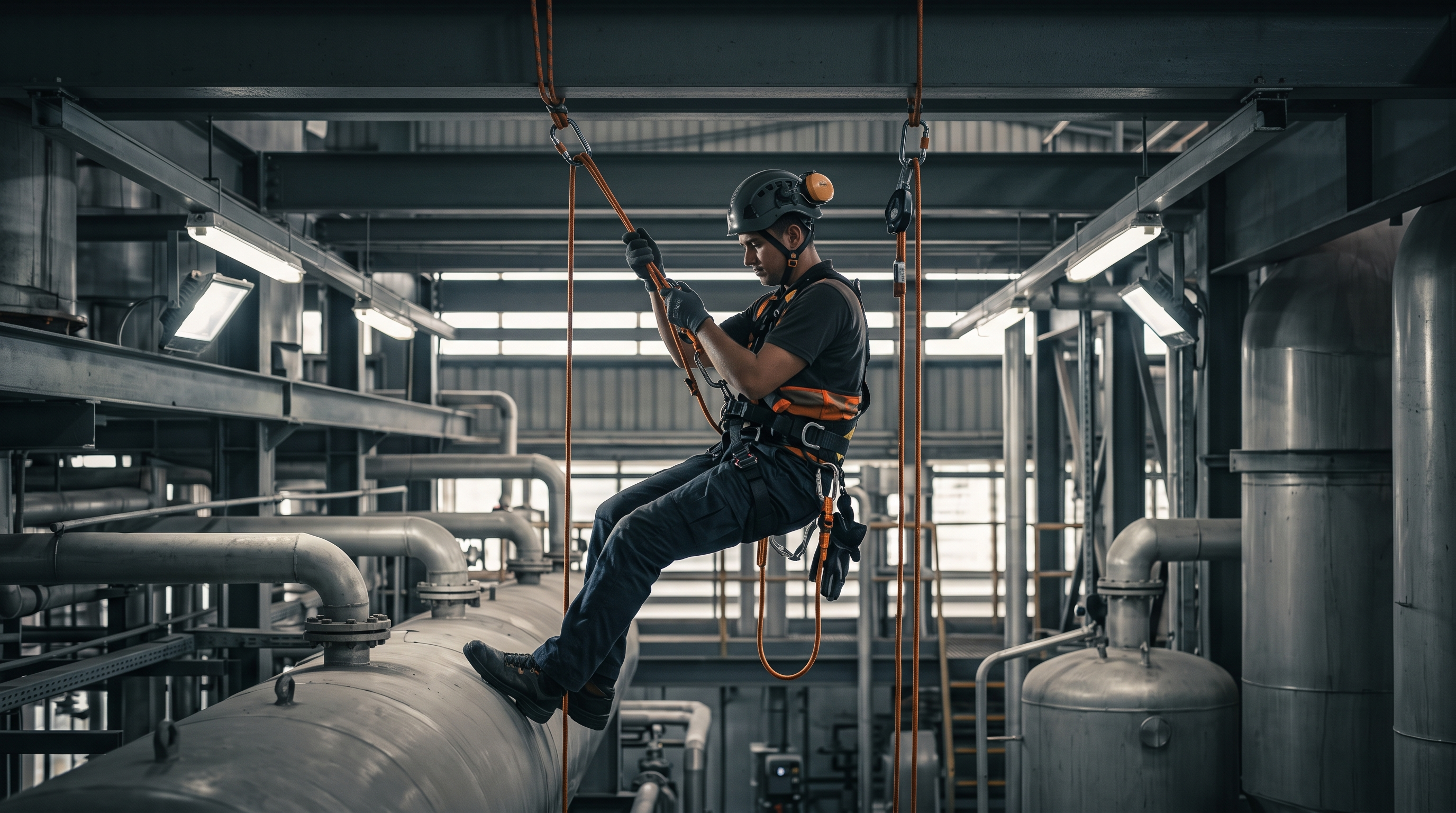
Industrial Rope Access
Access for tanks, silos, stacks, conveyors, towers and structural steel without erecting scaffold inside a live plant.
Service detail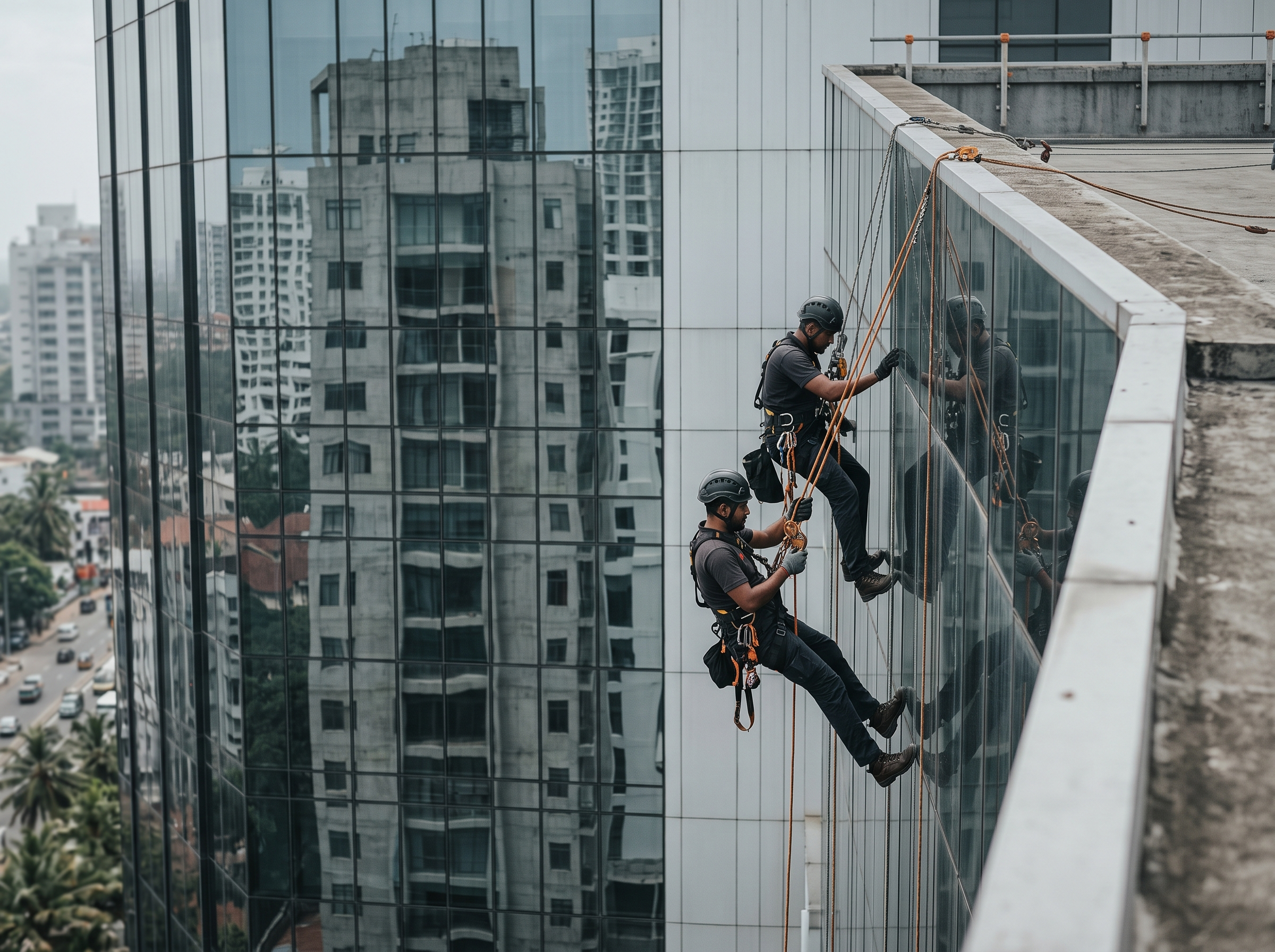
High-Rise Rope Access
Roof-anchored descents on apartment towers, hotels and commercial buildings, including elevations no cradle can reach.
Service detail
Height Safety & Difficult Access
Anchor checks, rigging, and rope access support so other trades can work safely in positions they cannot otherwise reach.
Service detailContact
Need rope access services? Let’s talk.
Send the building, the elevation and the problem. We will tell you whether rope access is the right method before we quote it.